Back to the origin –
Where language becomes music,
where one transforms into the other,
where the borders fade away
and something new is born.


LIBRETTO: Beate Haeckl
COMPOSERS: José Victor Gavilondo Peón and Yasel Muñoz Alvarez
CAST:
• Amadeo Roldán (1900–1939): Composer, Violinist, Conductor
• Alejo Carpentier – Author, Music Critic and Friend of Amadeo´s
• The Babalao: Afro-Cuban Priest
• Ensemble Singers and Dancers (POC): 3 male, 3 female
THE SUBJECT
The renowned Cuban composer Amadeo Roldán, confronted with his nearing death, struggles to create one final great work, yet must ultimately accept his defeat. In doing so, he comes to terms with his fate and regains inner peace.
Alongside Roldán’s personal fate and his struggle to elevate Afro-Cuban culture, including his turn toward Santería, the libretto also explores contemporary historical aspects of colonialism as well as issues of racial discrimination.
SYNOPSIS
At the age of 38, the conductor and composer Amadeo Roldán falls ill with oral cancer, which rapidly worsens. No longer able to work, he nevertheless dreams of leaving behind one final masterpiece: a grand opera.
In a vision, his childhood friend—the author and musicologist Alejo Carpentier, who has been living in exile in Paris for ten years—appears to him and encourages him to embark on this path. Together, they devise the plot for their Cuban opera—a tribute to the Afro-Cuban people—based on Carpentier’s novel Écue-Yamba-Ó (Praise Be to God). The inhabitants of the village depicted in the novel demand to be represented in the work, with all their daily joys and hardships. At the center of the narrative is a young couple in love; however, the woman is married to a jealous man.
The deeper Amadeo immerses himself in the work, the more he becomes captivated by the world of Santería and Afro-Cuban magic. As his health visibly deteriorates, he consults the oracle—through the mediation of a sorcerer known as a “Babalao“—to learn whether he will be able to complete his opera. The oracle remains enigmatic but advises him to persevere.
Carpentier, too, encourages Amadeo to continue working despite his increasingly frequent physical crises. The opera begins to take shape. Yet, at the same time, Amadeo feels his strength ebbing away, and the fear of death begins to consume him. Confronted with medical findings that seal his fate, he refuses all morphine treatment so that he may compose with a clear mind. In a nightmarish vision, he finds himself amidst a Cuban “danse macabre“, in which his deepest fears take shape. Figures from Cuban folklore urge him to surrender. In particular, his own soul implores him to hold it captive no longer—a plea that Amadeo stubbornly resists. He even goes so far as to engage in a physical struggle with the “Diablito“- the messenger of the gods- to whom he ultimately succumbs.
From that moment on, Amadeo accepts his destiny and returns to his true essence: the sound of his liberated soul. The Babalao reveals to him the significance of the afterlife: the deceased will forever share in the lives of their loved ones. Now at peace with himself, Amadeo entrusts his unfinished opera to posterity.
ORIGIN OF THE PROJECT
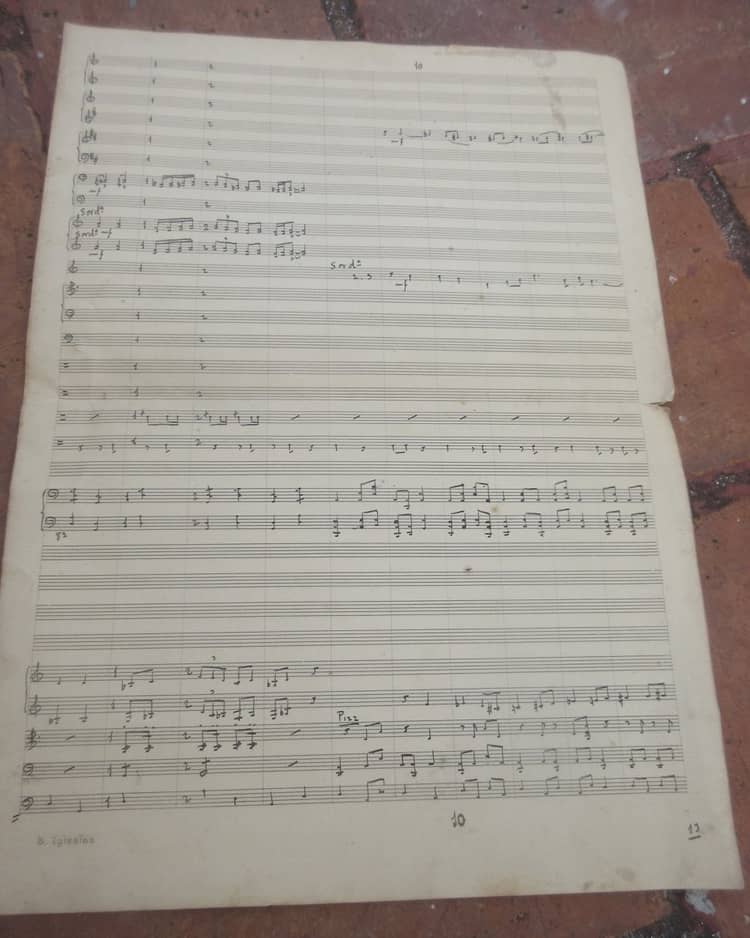
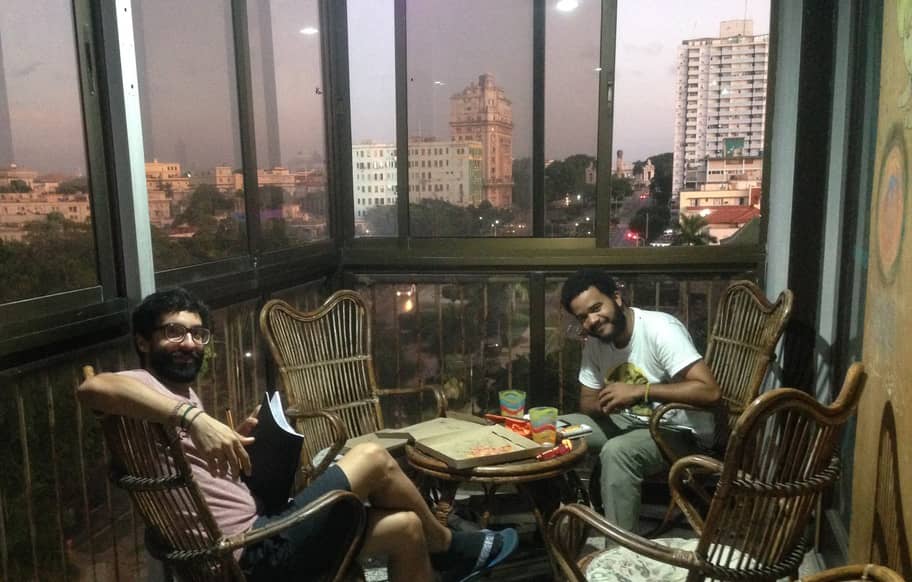
During my first trip to Cuba in the 1980s, I met Ricardo Roldán—the grandson of Amadeo Roldán, a Cuban composer and co-founder of the Havana Philharmonic Orchestra who was then unknown to me. What he told me about his grandfather immediately fascinated me. From that moment on, the idea of dedicating an opera to this composer began to take shape. I realized that I would need Cuban collaborators for the music. I found them in 2019 in José Gavilondo Peón and Yasel Muñoz Alvarez.
During the collaboration with these composers, the libretto benefited greatly from their Cuban perspective and many valuable suggestions. In 2020, the International Mozarteum Foundation took on the production process. However, the planned premiere in Havana—along with guest performances in Salzburg and other European cities from October 2020 onward —had to be postponed indefinitely not long thereafter because of the pandemic.
It remains my steadfast ambition to bring this chamber opera to the stage — a work capable of captivating audiences through the power of its story and its authentic Cuban flair. My respect and admiration for Cuban artists fuel my desire to share their talents with European audiences. In my experience, Cuba’s destiny continues to move us —again and again.
CURRENT STATUS
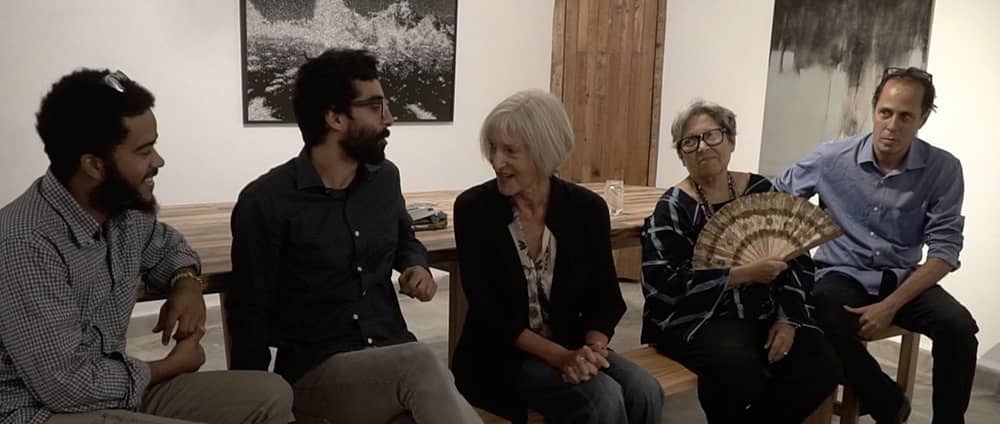
We have made contact with Brigitte de Montalembert, the co-founder of the international theater academy Fonact, which has expressed its willingness to collaborate. Furthermore, conductor Nathalie Marin is actively engaged in the search for producers, focusing primarily on Spain. A performance in Cuba would be the crowning achievement of this project.
THE LIFE OF AMADEO ROLDÁN
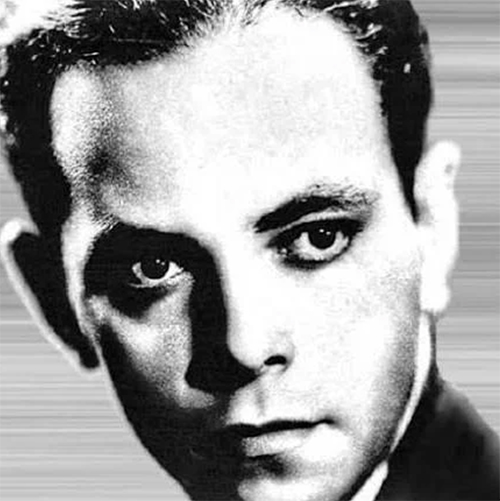
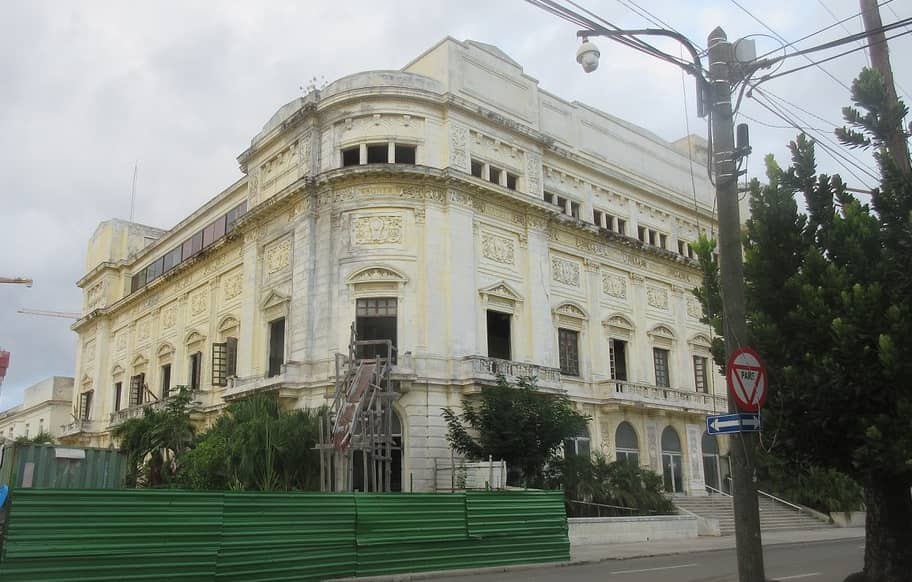
Amadeo Roldán was a Cuban composer who died in 1939 at the age of 39 from oral cancer, following a life dedicated entirely to music. After studying violin and composition in Madrid—where he spent the first twenty years of his life—he settled in Cuba to explore his family roots. He co-founded the Havana Philharmonic Orchestra and served as its principal conductor; in this capacity, he introduced audiences to the great European masters of both the classical and modern eras. Additionally, he founded a music academy where he taught for many years. However, his greatest achievement lay in the incorporation of Afro-Cuban rhythms and percussion instruments into his own compositions—elements that, until then, had remained largely overlooked by both classical musicians and audiences alike. To this end, he even developed a specialized system of musical notation. His friendship and close collaboration with prominent Cuban artists of that era—most notably the writer and music critic Alejo Carpentier—led, among other things, to the creation of the symphonic ballet La Rebambaramba, which garnered significant acclaim in Europe as well.
THE IDEA
Joseph Ponthus’ moving novel A la ligne – feuillets d’usine (On the line – notes from a factory) unfolds as a long poem in which the young author processes his experiences as a manual labourer in a slaughterhouse and a fish factory. The poetry of his language, the humanity of his gaze, and not least his humour form a fascinating contrast to the cruel brutality of alienated assembly‑line work.
From the very first reading I was captivated by the idea of bringing this rhythmic verse epic to the stage as a piece of music theatre. The text addresses a reality that is alien to many of us, yet to which we owe a lot for our everyday lives. By its very intensity, it seems to call out for a modern, experimental music.
THE TEAM
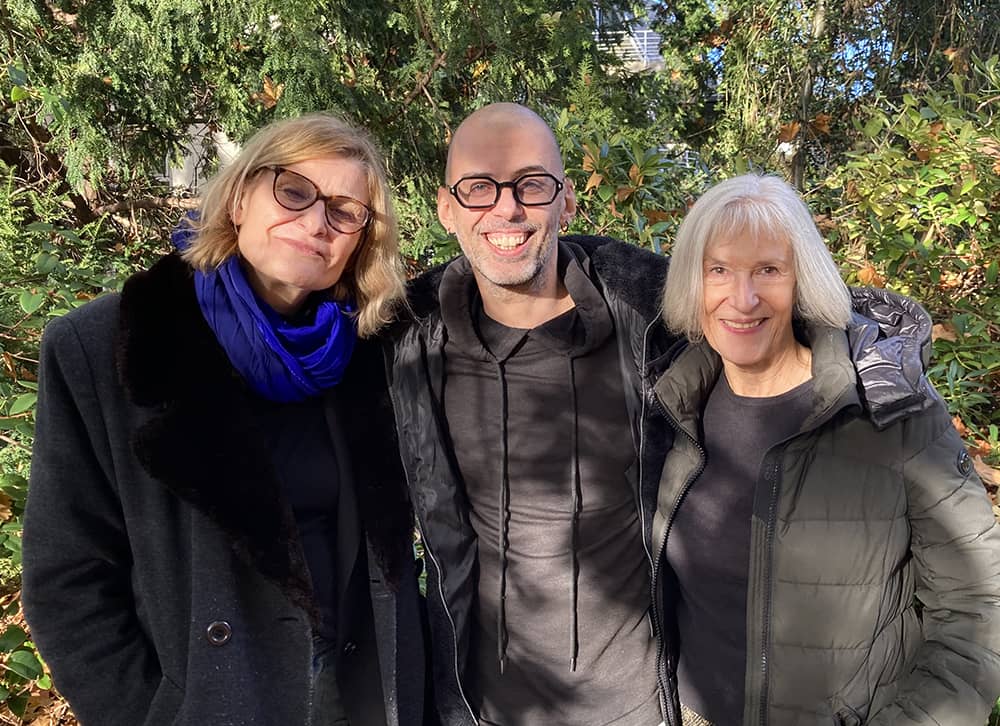
Dmitri Kourliandski quickly emerged as the ideal composer for this material—a composer whose theatre experience, energy, and experimental approach to music will enrich the libretto in a congenial way.
Anne Théron as director, will bring the characters to life through the multidisciplinary approach she has developed in numerous theatre productions.
Agnès Pyka, and the string players of her ensemble Des Équilibres, with whom she explores the most diverse artistic currents, will enter into a dialogue with Kourliandski’s electronic music.
CURRENT STATUS
To realize the project, we are looking for producers and co‑producers.
We are in constructive discussions with the opera houses in Nantes and Lille, as well as with the Festival d’Aix‑en‑Provence, but still need further partners to bring the piece to the stage.
For us, a production at one of the opera houses in northern France would be ideal, since the action of the opera takes place in Brittany. At the same time, the subject matter is so universal that the work is by no means limited to the French‑language sphere.
BLURB
(from the German edition by Matthes & Seitz Berlin)
“Am laufenden Band (A la ligne – feuillets d’usine) tells Joseph Ponthus’ odyssey through fish factories and slaughterhouses in Brittany. In free verse that runs like a conveyor belt, Ponthus describes alienated shift work, cold and stench, physical exhaustion, and the ever‑present death of animals, but also the solidarity and humour of the workers, as well as the paradoxical beauty of the cold factory halls. While he shovels tons of conch shells onto the production line and pushes bloody carcasses, the mechanical gestures stir up memories of the song-writers and authors who shaped him.
Joseph Ponthus, born in 1978, studied literature and social work in Reims and Nancy. After ten years as a social worker in the suburbs of Paris he moved to Brittany in 2015 and worked there for two and a half years in fish factories and slaughterhouses. His novel A la ligne appeared in 2019. For this book, Ponthus received, among other awards, the Grand Prix RTL Lire 2019, the Prix Jean Amila‑Meckert, and the Prix Eugène Dabit du roman populiste. Joseph Ponthus died in February 2021 at the age of 42.“ (translated by B. Haeckl)
You need to load content from reCAPTCHA to submit the form. Please note that doing so will share data with third-party providers.
More InformationYou are currently viewing a placeholder content from Turnstile. To access the actual content, click the button below. Please note that doing so will share data with third-party providers.
More Information