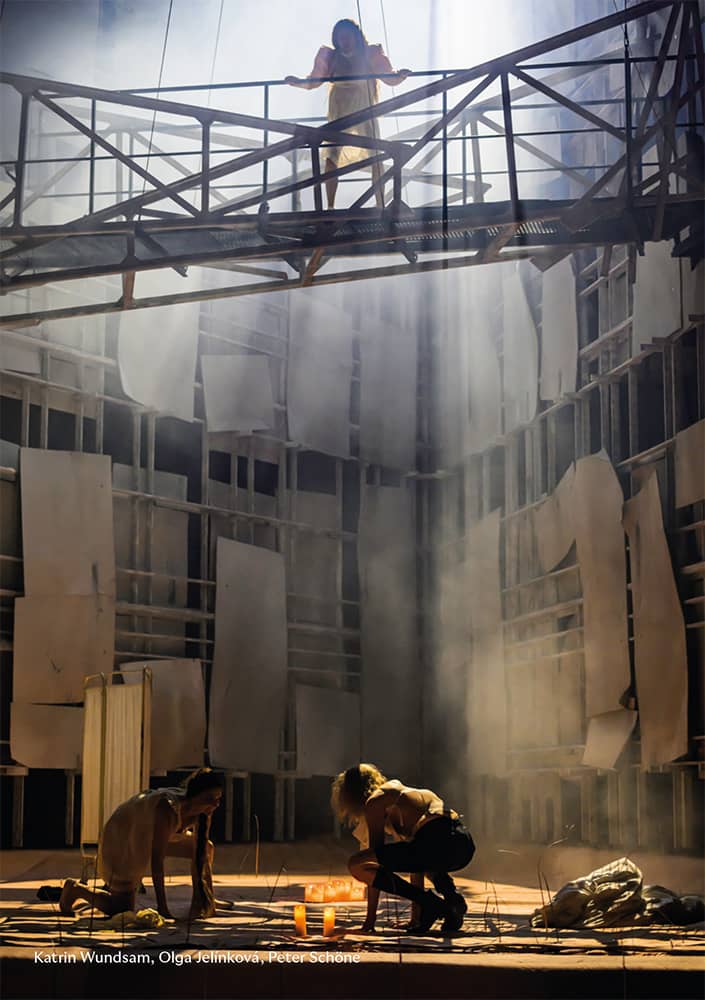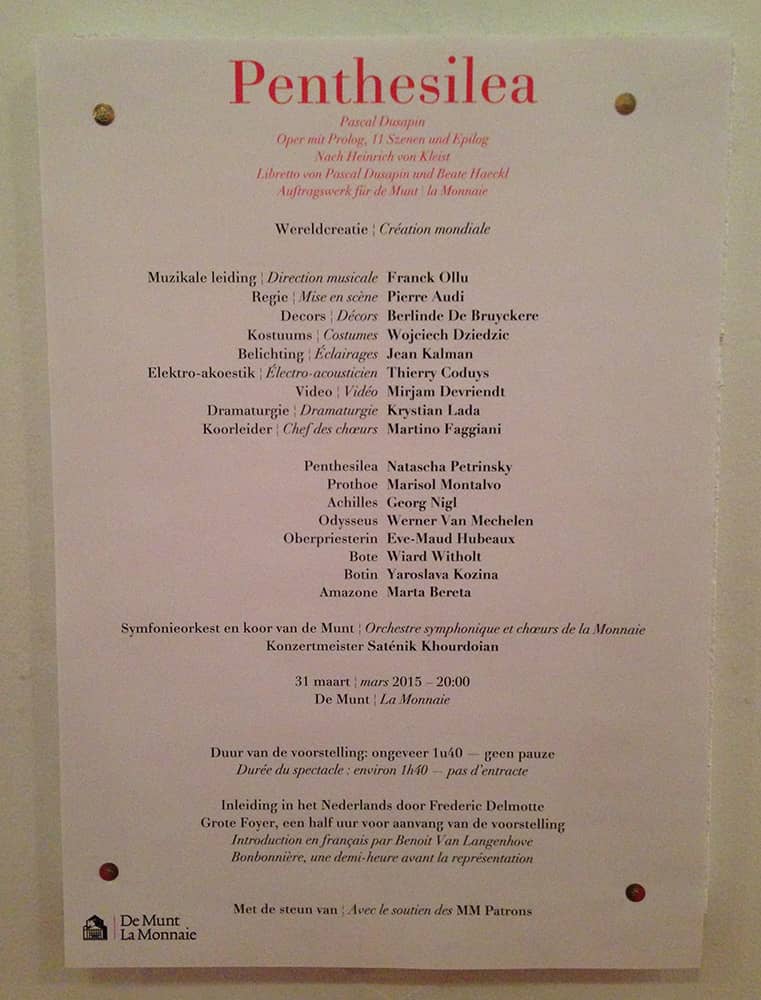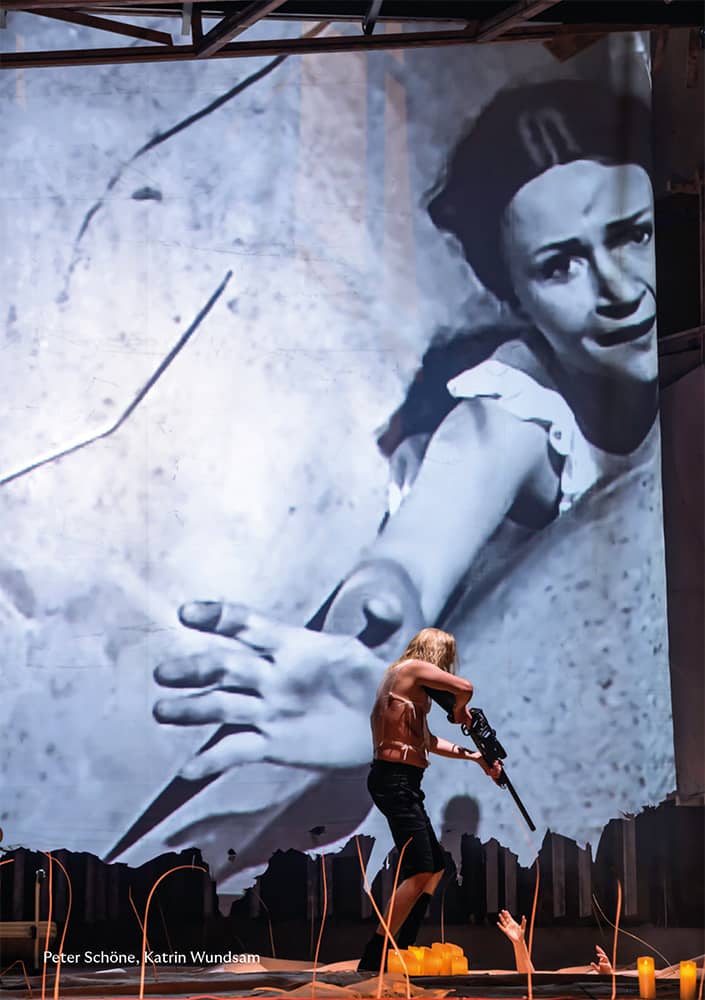
Libretto by Beate Haeckl and the composer
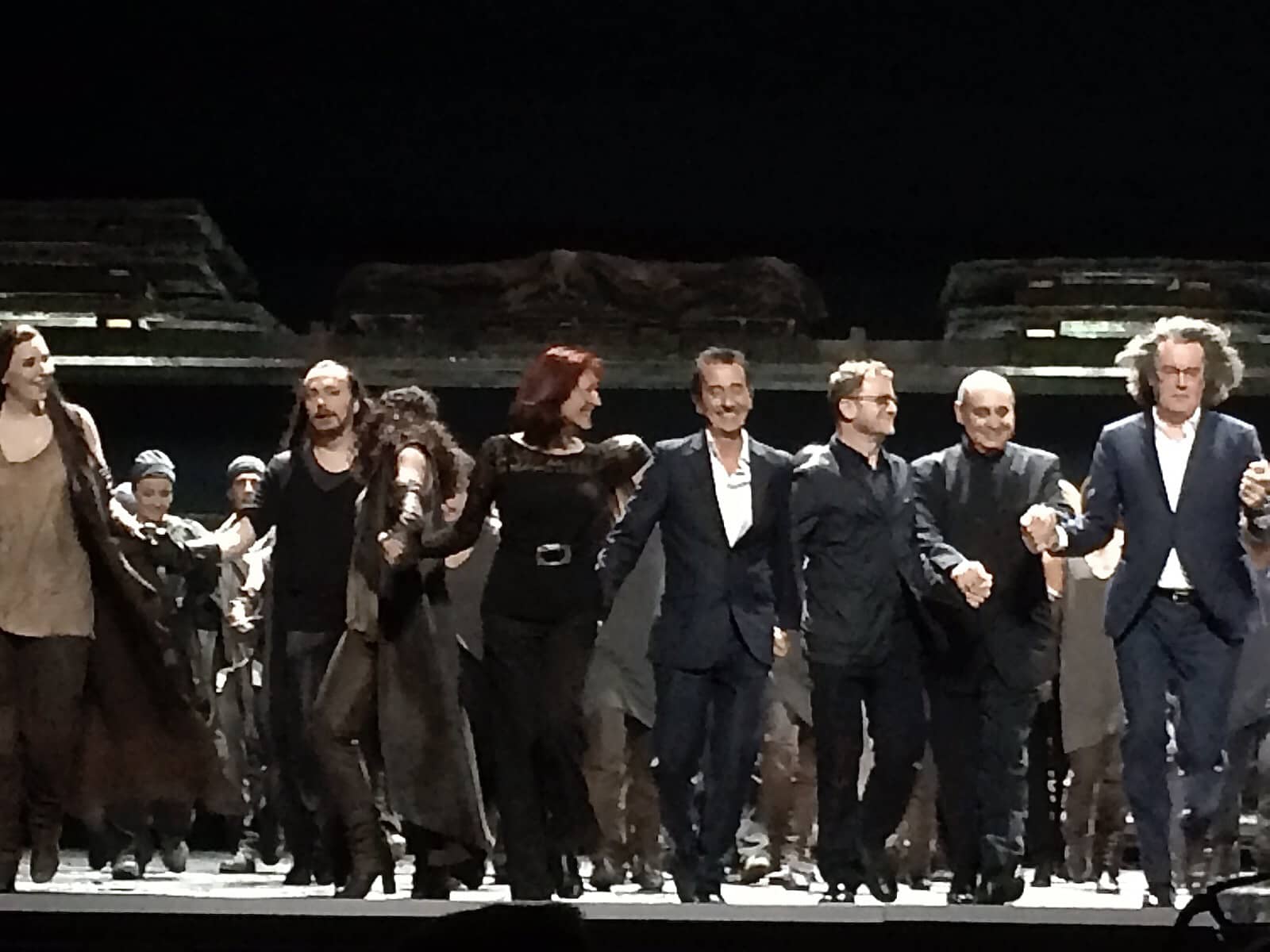
World Premiere: Théâtre de la Monnaie / De Munt, Brussels, 31 March 2015
Co‑production with l’Opéra du Rhin, Strasbourg
Prix de la critique en théâtre et musique for the best new musical creation, 2015
CD Recording: Cypress CYP3654 live recording of the premiere from the Brussels opera house La Monnaie / De Munt, 2015
Further performances, among others:
• Philharmonie de Paris beim Festival d’Automne 2020 and video live from the Festival d’Automne at the Philharmonie de Paris streamed via Arte Concert
The librettist’s view on Penthesilea (from the program)
“Kleist’s drama Penthesilea poses a real challenge to the opera composer and the librettist. How can such an opulent work, which breaks with the conventions of Classicism both formally and thematically, be tamed musically? How can the demands of literature be reconciled with those of music? In dramaturgical terms, this undertaking requires a concentration on the central conflict. Kleist’s wild, primal language necessitates a simplification of syntax and, at times, a cautious modernization of vocabulary. The main goal in the collaboration with Pascal Dusapin was to preserve the spirit of the Kleistian tragedy while at the same time giving music enough space so that, through the interplay of both forces, the timeless modernity of the drama might be conveyed to the audience.“
Reviews (selection / excerpts)
• FAZ Feuilleton, 2 April 2015, Jan Bachmann: “Keine Weicheier in Stahlgewittern”
… “Beate Haeckl fashioned from this material a libretto for an opera of roughly one hundred minutes. Kleist’s nested, complex sentences are broken down into a dialogic ping‑pong, the words sharply spiced with modern ingredients such as Stahlgewitter and Weicheier.”
• Gesellschaft der Opernfreunde Hannover
• Junge Welt
“A good three thousand lines of dramatic verse would make for an endless opera evening. Anyone who sets this play to music must cut decisively. The composer Pascal Dusapin and Beate Haeckl have created a libretto that contains all the essential stages of the action, yet is nevertheless something new. Even though Penthesilea remains Queen of the Amazons, the law governing this women’s state is only sketched in: that the women from time to time must capture men in war to use them for the generation of the next, and that love has no place in this arrangement.”